
What the hell is ease, anyway?
First disclaimer: this kinda wanders in bits, but it finally hit 90F today.
I don't do 90 very well.
Blame Seamwork for the question. Today's video from them is on this topic
"Learn everything you
need to know about ease in a sewing pattern. We'll cover wearing ease, design
ease, negative ease, and how to calculate ease so that you get the right fit
when you sew a new pattern!"

https://youtu.be/HL0H1kaLahE
Well, not everything.
Yes, ease exists. But how much of it do I want? How much is built in? How much is useful? Sewing knits will forgive my measuring fail, but I am all about those woven novelty cottons. They are not forgiving.

This is the Vogue Patterns ease chart, and it's pretty much the same as all the others now, because One Company To Rule Them All.
These are the numbers that are baked in to the pattern, per the description on the envelope. To be honest, these aren't exact numbers anyway, and the larger the size, the percentage of ease may stay the same, but the actual number goes up. 10% of 100 is ten. 10% of 200 is twice as much. So these are our theoretical numbers for the loose definitions of clothing descriptions.
And those descriptions are key in pattern size choice.
Two examples:

Closing fitting through the bust, but a Very Easy Vogue. I'd use the bust measurement size, and probably let those waist and hip seams out.

Loose fitting through the bust but no adjustments in hip or above waist. Sewing rating: advanced. I'd use the hip measurement for size, but I'd pull the instructions out and read about construction first. It looks easier than it is.

I'm looking at the stated measurements on a pattern envelope, and I have the question: which size for me? Or more to the point, which sizes.
If I use the finished garment measurements, measured from the pattern and sewn with a woven fabric, I'm busting seams. Assuming there's adequate ease in this pattern, I'm going by their size chart. I can always pinch out a small amount.

I'm a big bottom gal, so I go by the waist number, because the hip expanse will be bigger and I can accept that in a dress. In pants or a blouse, I would make different choices depending on the style. If the waist is the point of the blouse, then...well, I'm probably not picking that style. But generally, I go with the area that has the most detail in it. A shapeless sack with a cool waist feature - I'm going with the waist. A dress pattern with a waist seam but something interesting in the bodice....I go to the bodice. LIke those patterns I showed before: where is the hardest part to alter? That's the measurement I'm most concerned with meeting.
Usually my best move to alter the bust in a pattern is to select the printed seam line for the size indicated for my bust measurement on the pattern envelope (grading from the 16 to that 22 and then staying on the 22 line). The ease will be consistent with the waist and that very ease-y butt will not be an issue.
The finished garment measurements are printed on the pattern pieces on Vogue Patterns, and sometimes on the envelope/instructions. As time goes by, these measurements will be on all the patterns all the time. When you consult them, you gotta remember you don't want to hit that number exactly (unless it's a knit you're using).
What kind of ease should I expect or build in when I'm drafting for myself?
https://shop.mybluprint.com/sewing/article/ease-in-sewing/
does a very nice job saying roughly the same things but differently. So if I'm not making sense, she may.
Ease is different depending on the style and WHERE we're measuring. If you think about how we use each type of clothing, it makes sense. That's about how much I want for those descriptions. Your needs will vary, but you get the idea.
For a person like me who still sews the size 8 Miyake 80s oversized patterns, I am not observing the designers' drape style with my size 16 body. The flow you get with a Miyake or a Tina Givens with 5-10" of ease is different with the same with 2". It becomes a matter of personal taste. Like my fitted waist and my biiiiiiig butt.
It needs to move. Also, if it's a dress, I'm wearing something under it. pettipants or tights or going toddler and wearing pants.
Scratch that. I'm not wearing a dress over pants. Your mileage will vary.
Another issue is what kind of fabric am I using? Knits forgive a lot, stable knits much less. Ponte - not so much. A rayon wants more ease because it wants to drape. If stressed, it will tear in the middle, not on a seam. A novelty cotton has no drape except on the bias (and even then.....) so it's going to stand away from the body. It will rip on the seam. Which is easier for mending and adding width.
I'm overdressed for the office today so the idea of 5" to 10" of ease in a dress seems very attractive. Ponte fabric, not hardly.
So if you want a sales pitch and a great tutorial on this subject:
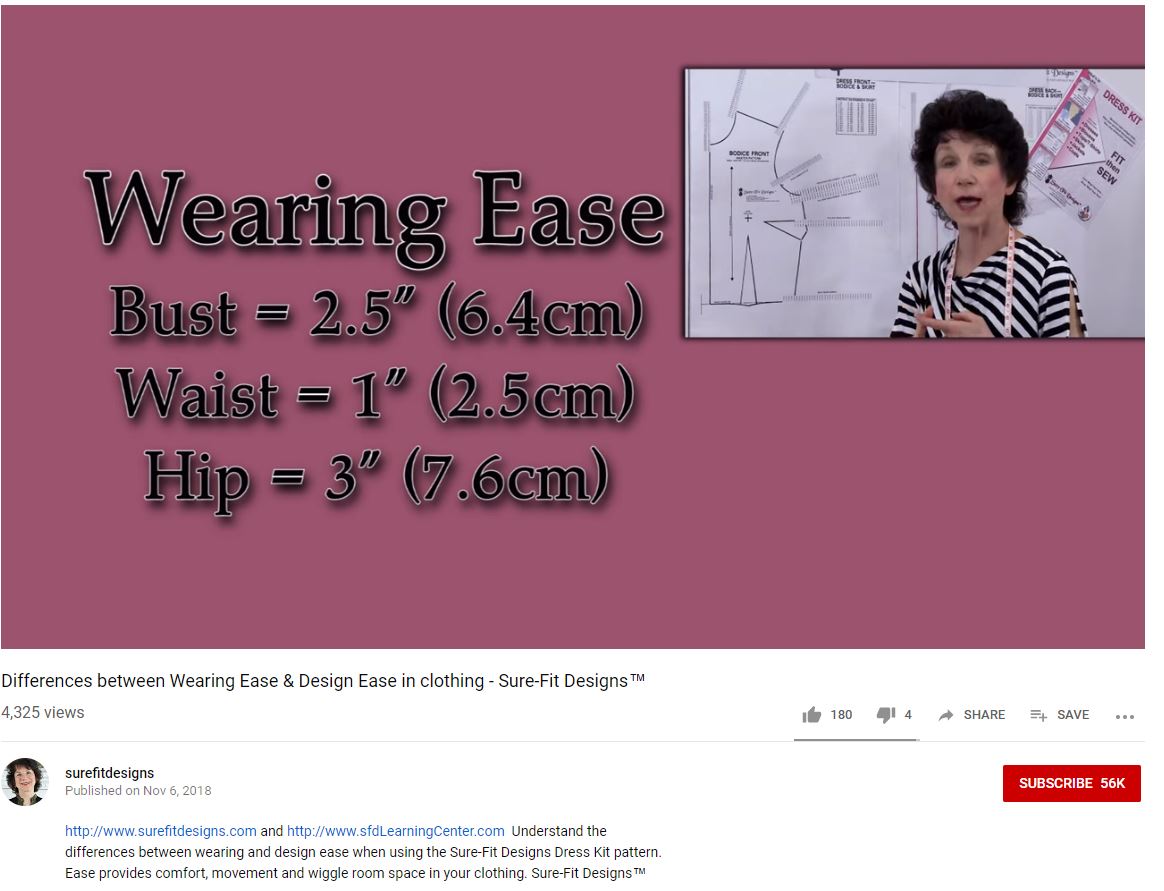
Glenda at Sure Fit.
She sells a nice product, and she explains things pretty well on YouTube.

Sure fit designs
about what is the functional difference
https://youtu.be/Hy_tv8_bgzY
and the presentation of the difference is at
https://youtu.be/Hy_tv8_bgzY?t=375
and the answer to today's question: the bare minimum amounts according to her (and they make sense).
Disclaimer: I still don't get paid for promoting anyone but me. I'm still very happy with that as well.


